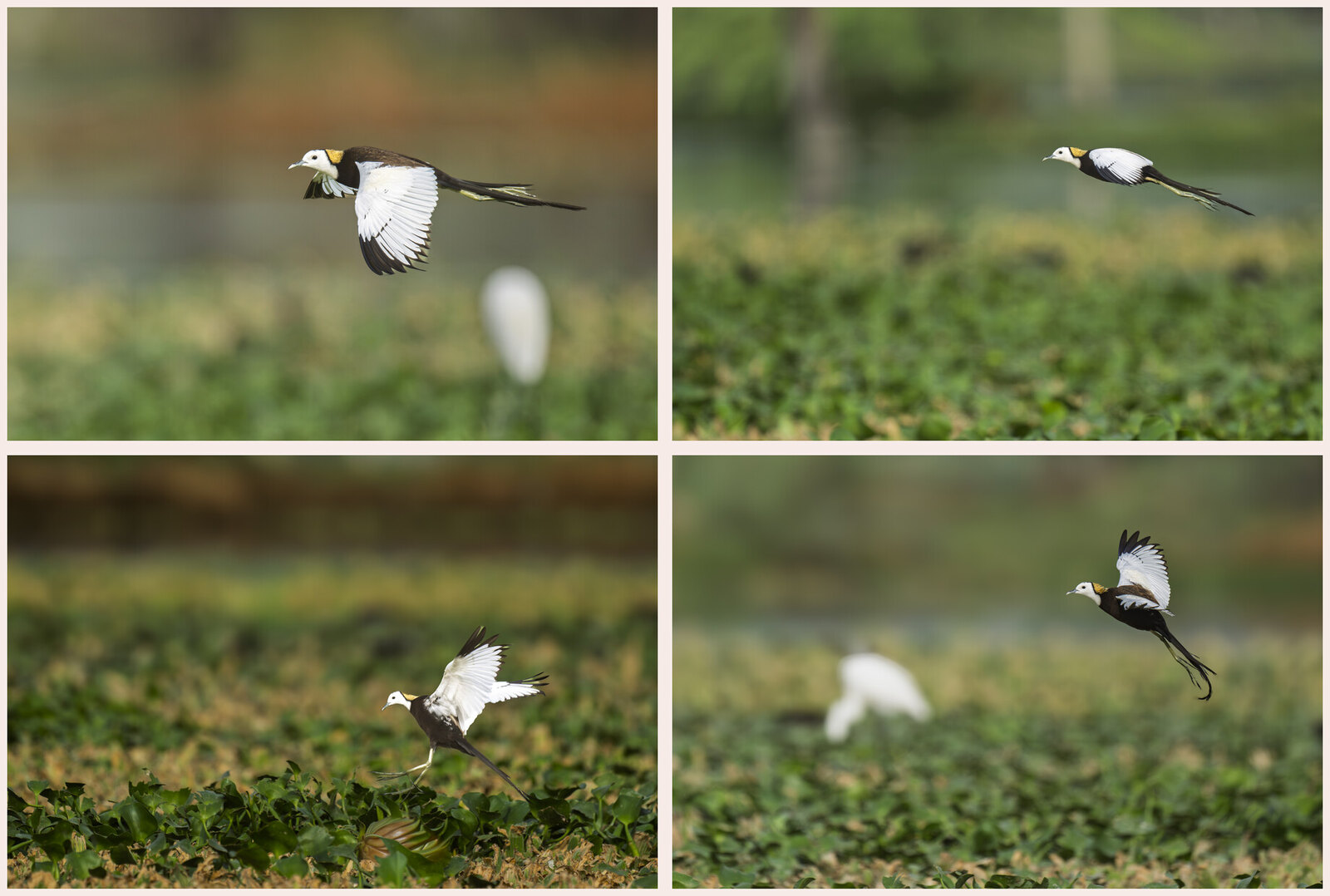
Every serious photographer has had this moment. You finish a shoot you are quietly proud of, sit down to edit, pick a hero frame, send it out, and watch it land with a thud. No replies. No buyers. No editor calls back. You look at the frame again a month later and the air goes out of it. You cannot believe you chose that one.
The instinct is to blame the audience, the platform, or the algorithm. The honest answer is harder. You cannot reliably critique your own photos, and learning how to critique your own photos well starts with accepting that the problem is not laziness or taste. It is a stack of cognitive biases that all line up against you the moment the shutter clicks. Once you name them, you can build around them.
The honest answer, you cannot self-critique well
Photography teachers love the phrase "develop your eye". It sounds noble. It is also misleading, because it suggests that taste is a muscle you train in private. The opposite is true. Taste is calibrated in public, against work that is better than yours, with people who tell you when you are wrong. Self-critique alone calcifies your taste against your own habits.
Why the photo you suffered for is overrated
The frames you remember are the frames you worked hardest for. The five-hour wait in the hide. The cold morning on the ridge. The street corner you returned to six days in a row. Your memory of effort colors the photograph. The viewer cannot see the effort. They only see the rectangle.
The "I was there" problem
When you look at your own photo, you do not only see the photo. You see the smell of the air that morning, the sound the leopard made when it shifted, the way the light felt on your hands. None of that is in the file. A stranger sees a JPEG. You see a memory wearing the costume of a JPEG.
Endowment effect, why your photo always looks better
The endowment effect is a well-documented pattern. We value something more once we own it. In classic experiments, people given an object demand far more to part with it than others are willing to pay to acquire the same object. The object has not changed. Ownership has.
Photographs are the purest form of ownership. You did not buy them. You made them. The valuation gap on your own work runs even wider. You will rank your own frame above a stranger's better frame, blind, more often than chance.
What endowment effect is
Ownership distorts judgement. Once a photograph is yours, parting with it, demoting it, killing it from the edit, feels disproportionately painful. Loss aversion does the rest. You keep marginal frames in your portfolio because removing them feels like losing money you never had.
Anchoring, why the first edit poisons the rest
Anchoring is the bias where the first number you hear influences every subsequent estimate. In photo editing, the first frame you flag as a "keeper" anchors the entire shoot. Every other frame is then judged against that one. If your first flag is wrong, the rest of the edit is wrong with it.
First-edit lock-in
Sit down with a fresh shoot. Within ninety seconds, you have favored three or four frames. Those become your reference set. Two days later, you cannot un-see them. The genuinely better frame, the quieter one that needed a second look, is now competing against a story you have already told yourself.
Why your hero shot picks itself wrong
Editors at picture agencies know this. The old darkroom tradition of the contact sheet was partly a defence against anchoring. You looked at the whole roll, in sequence, before you circled anything. The grease pencil came after the eye.
Sunk cost, why the difficult shot stays in the portfolio
Sunk-cost fallacy is the trap of letting past effort drive present decisions. The half-frozen morning that gave you one ordinary frame should not earn that frame a permanent slot in your portfolio. It often does. The portfolio becomes a museum of effort, not a museum of work.
A well-established principle of deliberate practice is blunt about the limits of self-assessment. Experts in every field tend to plateau the moment they stop receiving external feedback. The self does not have the apparatus to grade itself reliably. The photographer who keeps the cold-morning frame because of the cold morning is doing exactly what that pattern predicts.
Recency bias, why your latest shoot always feels strongest
Your most recent shoot will feel stronger than it is. Recency bias inflates the freshest impression. You are still inside the experience. The dopamine of new images has not settled. This is the reason photographers post their newest work the same week they shoot it, and quietly delete those posts six months later.
The contact sheet was not for the editor. It was for the photographer, to slow down the moment of judgement.
The cooling-off method (and why a week is not long enough)
The most common advice on self-critique photography is "step away for a few days". It is not wrong. It is not enough.
A week dulls the endowment effect a little. It does not break anchoring, because your first edit is already saved. It does not touch sunk cost, because you still remember the cold. The cooling-off method works best at three weeks or longer, with no peeking, and with the file renamed so you cannot see your own labels.
A practical cool-off protocol
- Import, rate nothing, close the catalog.
- Wait twenty-one days minimum. Forty is better.
- Re-import as anonymous filenames. Do not look at flags or stars.
- Score blind. Compare to your scores from week one.
- Trust the second pass more than the first.
The stranger's frame, how to fake an outside eye
You cannot become a stranger to your own work. You can stage tricks that approximate it. The point is to disrupt the cues that trigger your biases.
- Flip the image horizontally. Suddenly the composition reveals itself. Weak horizons, lazy diagonals, off-balance subjects. You see what a viewer sees.
- Convert to small thumbnails. If it does not work at 240 pixels, it does not work. Editors look at thumbnails first.
- Greyscale a colour shot. If colour was doing the heavy lifting, you will find out fast.
- Print at A5. The screen flatters everything. Paper does not.
- Show it to someone outside photography. Their first reaction is the closest thing to honest you will get from a human who likes you.
The five-question checklist for any frame
- What is this photograph actually of, in one sentence, said out loud.
- Where does the eye land first, second, third.
- What can I remove without losing the picture.
- Would I keep this frame if a stranger had shot it.
- Does it still hold at thumbnail size.
The fourth question is the one most photographers skip. It is the one that matters most. If the answer is no, the frame stays out of the portfolio, no matter how cold the morning was.
Where AI critique can substitute for an outside eye
An outside eye used to mean a mentor, an editor, or a peer with taste and no social investment in your success. Those people are rare in 2026. Most photographers do not have a trusted mentor or working editor on speed-dial. Honest critique is the real bottleneck on growth, and that bottleneck has not loosened.
This is the gap an AI critique layer can fill. Not the only feedback you need, but the layer that scales. An AI does not own your photo. It has no endowment effect. It is not anchored by your first flag. It does not remember your cold morning. It can read a frame the way a stranger reads a frame.
That is what we are building at KaizenShotsAI, a structured outside eye that gives you the one fix that matters, frame by frame, without flattery and without fatigue. It is not a replacement for a human mentor. It is the everyday surface that human mentors never had time to be.
When to stop critiquing and ship
The other failure mode is the photographer who critiques forever and never publishes. Self-critique has a useful range. Past it, you are not improving the photograph. You are just rehearsing your anxiety on the file. Three blind passes on a frame is usually the ceiling. After that, ship it, watch the reaction, and learn from the response.
Here is the heart of it. The camera does not make the photographer. The photographer's willingness to look honestly at what came out of the camera does. Honesty is hard precisely because biology is against it. The work is to engineer past the biology.
If this resonates, read about how to get useful feedback on your photography, then look at why your photographer friends cannot give it to you. The structural problem with peer critique is the same problem you have with self-critique, scaled up. For the craft layer, see how AI photo critique actually improves your photography, and once you have a destination in mind, the discipline of setting photography goals tied to that destination is what turns a critique habit into a body of work. If you keep hitting the same wall, the piece on the photography plateau is the next read.